
Air Valve Assessments

Background

Air valves, though frequently overlooked, are critical assets in safeguarding water networks from significant damage and operational inefficiencies. They are essential not only for new mains commissioning but also for managing air during and after burst events, releasing air generated by pump cavitation, and providing crucial protection against negative surge pressures. The absence or malfunction of these vital components can lead to severe consequences for the network.

Specifically, trapped air can act as a throttle, impeding flow and reducing efficiency; the oxygen within it can accelerate pipe corrosion; and it can cause meters and control valves to malfunction, leading to inaccurate readings and operational failures. Furthermore, the build-up of pressure from trapped air can result in damaging transient pressures (air hammer), while vacuum conditions can cause catastrophic pipe failures.

Critical air valve protection

Trapped air risks identified
GIS and LiDAR integration
Optimised valve placement recommendations

Our Approach

Assessing and optimizing air valve networks involves a systematic process to identify critical areas and ensure optimal valve placement and type.

Firstly, we categorize DMAs (District Metered Areas) and trunk mains by their risk factor (high, medium, or low). For instance, a pumped trunk main inherently presents a higher risk profile than a gravity main due to increased potential for surge issues.

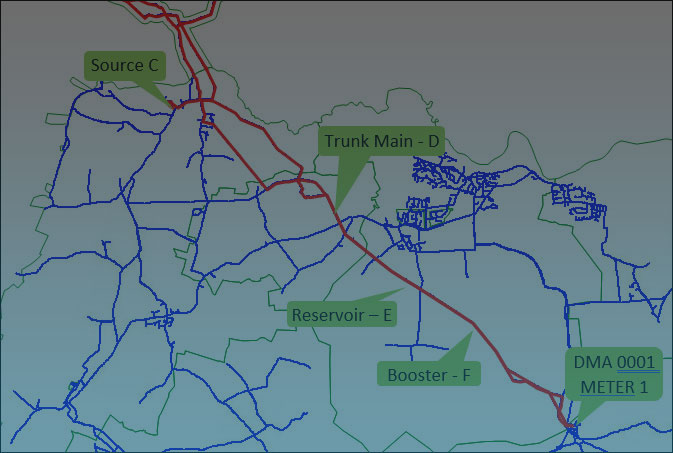
Given that air valve locations are typically not included in the model, we begin by importing existing valve locations into the network from GIS data. To ensure the accuracy of our analysis, it’s crucial that network elevations are correct. We verify nodal elevations using recent LiDAR data. For long stretches of main that require a more granular understanding of high and low spots, we utilise Ruby script and inference tools to subdivide these mains into shorter sections, updating their elevations accordingly.

Finally, we leverage hydraulic models to assess nodal elevations in comparison to existing air valve placements. This allows us to determine if valves are optimally located at critical points such as high spots, low spots, and pump outlets. We also verify that the correct valve type has been selected for each specific application. Where air valves are missing, we provide recommendations for new locations, detailing the necessity for their installation and specifying the appropriate valve type to be used.

If you would like to learn more about how HydroCo can support you with pressure management assessments, please contact us at innovation@hydroco.co.uk or call 023 92 450 007.
Pressure Management Studies

Background

The water industry is facing increasing pressure to reduce per capita consumption and leakage levels. This means we can’t just focus on optimising new systems; we also need to get the most out of existing assets. Pressure management is key here, helping to drive down leakage, minimise bursts, and create smaller, pressure-monitored zones for better overall reporting and control. This proactive approach not only conserves valuable water resources but also enhances the longevity and efficiency of the entire network.

Pressure optimisation reduces leakage

Hydraulic modelling guides strategy

Control options maximise savings

Enhanced resilience and efficiency

Our Approach

Our process begins with using hydraulic models to identify potential savings. We first verify these models against real-world data, including pressure, flow, and consumption, ensuring they accurately reflect current operations. This model validation establishes a precise baseline for detailed analysis.

Based on each water company’s specific minimum pressure requirements (for customer service and firefighting), we optimise zonal pressures. For existing systems, this may involve adjusting current pressure regulating valves (PRVs) using strategies like fixed-outlet, time-modulated, or flow-modulated control. If new control is needed, our hydraulic modelling determines the optimal location and sizing for new assets such as PRVs, pressure sustaining valves (PSVs), or variable speed pumps.

We then assess various control options to maximise savings and performance. A key step is a thorough CAPEX and OPEX assessment for each proposed scheme, evaluating projected water and energy savings against investment costs to demonstrate a clear Return on Investment (ROI).

Beyond financial returns, optimising pressure significantly reduces bursts, leading to lower repair and maintenance costs, fewer customer disruptions, and extended asset life. A “calmer” network also reduces new leaks and improves system resilience, offering environmental benefits through water and energy conservation.

If you would like to learn more about how HydroCo can support you with pressure management assessments, please contact us at innovation@hydroco.co.uk or call 023 92 450 007.

Large-Scale Strategic Asset Outages

Background

HydroCo has recently completed a series of hydraulic modelling studies for a client, focusing on the isolation of key assets across their water supply network, including pumps, reservoirs, and water treatment works. These studies were undertaken to support the client’s strategic planning, identify critical reinforcement needs, and inform emergency response planning in the event of mechanical failures or power outages.

Strategic Asset Outage Modelling

Critical Infrastructure Vulnerabilities Identified

Mitigation Strategies Developed

Network Resilience Prioritised

Our Approach

The modelling was carried out using InfoWorks WS Pro and incorporated a range of the client’s hydraulic models. In several cases, it was necessary to combine multiple models to fully capture the system-wide impacts of specific outages. Each scenario was assessed under two demand conditions:

  • Average demand, reflecting recent telemetry and operational data
  • Peak demand, simulating maximum usage to test system performance under stress

Simulations were run over extended periods to evaluate the dynamic impact of outages, including reservoir depletion and customer supply interruptions over time.

Based on the modelling results, HydroCo developed a series of mitigation strategies. These included short-term operational adjustments to extend reservoir service duration, as well as longer-term strategic options involving inter-reservoir transfers to maintain supply while affected sites were brought back online.

In some instances, the modelling identified scenarios where no feasible mitigation was possible—highlighting key vulnerabilities within the network. These findings provided the client with critical insights into system limitations and informed the prioritisation of infrastructure reinforcements to enhance network resilience.

If you would like to learn more about how HydroCo can support you with asset outage assessments, please contact us at innovation@hydroco.co.uk or call 023 92 450 007.

Age of Water & Flushing Assessments

Background

Understanding the age of water within a distribution network is crucial for maintaining water quality and ensuring safe consumption. The age of water refers to the time taken for treated water to travel from source to tap. Prolonged water age can lead to various issues, including taste and odour concerns, as well as potential degradation in water quality.

Water Quality Scientists play a vital role in monitoring and managing water quality across the network. They assess key parameters, investigate consumer complaints related to taste and odour, and recommend corrective measures such as flushing assessments to maintain water safety.

Age of Water Simulations

Hydrant Flushing Analysis

Identifying Network Configuration Issues

Integrated Approach to reduce WQ Risk

Our Approach

Hydraulic models provide valuable insights into the age of water within the network, calculating travel time based on typical demand conditions. To determine the age of water accurately, simulations must be configured to run over an extended timeframe with high computational accuracy and small increments in water quality timesteps. Model integrity is critical in this process, requiring careful consideration of demand allocation, reservoir pipework configurations, and dynamic model controls to ensure precise results.

When Age of Water data is combined with hydrant flushing simulation analysis, it becomes a powerful tool for identifying deadlegs, optimising hydrant flushing flow rates to protect local distribution pressures, and calculating flushing durations to develop a comprehensive flushing programme.

Assessments are conducted on a District Metered Area (DMA) basis, identifying problem mains where hydrants do not exist, highlighting issues at boundary valves that may be resolved through rezoning, and flagging concerns with push-pull reservoir systems where customer demands are insufficient relative to the storage tank volumes that serve them.

By integrating these two simulation techniques, water companies gain a valuable dataset that enhances asset management, reduces water quality incidents, and improves overall system understanding.

If you would like to learn more about how HydroCo can support you with age of water & flushing assessments, please contact us at innovation@hydroco.co.uk or call 023 92 450 007.

A Water Company’s Journey Towards a Digital Twin

Harnessing the Power of Data for Smarter Water Management

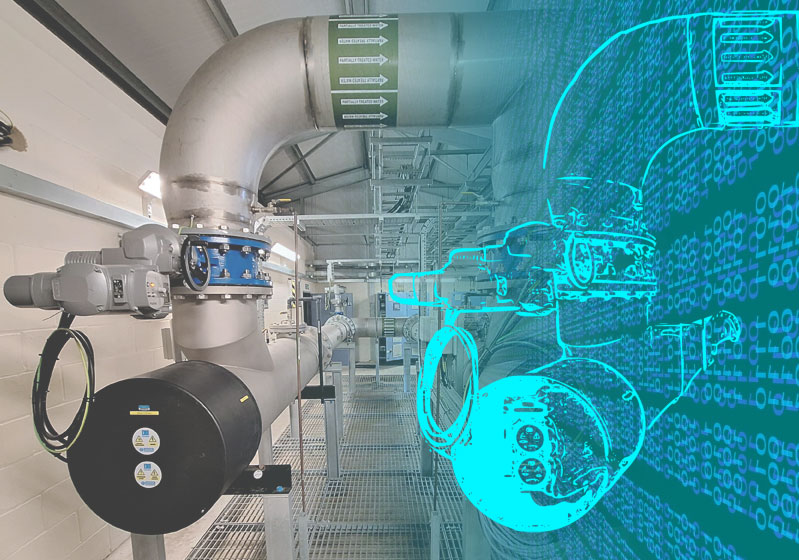
In today’s rapidly evolving technological landscape, the concept of a digital twin is gaining significant traction across various industries. A digital twin is a virtual replica of a physical asset or system, allowing for real-time monitoring, analysis, and optimisation. For water companies, the potential benefits of a digital twin are immense, from improving operational efficiency to enhancing customer satisfaction.

The Benefits of a Digital Twin for Water Companies

  • Enhanced Operational Efficiency: A digital twin can provide valuable insights into water distribution networks, enabling companies to identify leaks, optimize water pressure, and minimize leakage. This can lead to significant cost savings and improved resource management.
  • Improved Asset Management: By creating digital twins of critical infrastructure, such as water treatment plants and pumping stations, water companies can proactively monitor equipment health, predict failures, and schedule maintenance more effectively.
  • Enhanced Customer Service: A digital twin can empower water companies to respond more quickly to customer inquiries and complaints. By having real-time data on water quality and pressure, companies can provide accurate information and address issues promptly.
  • Improved Decision Making: A digital twin can support data-driven decision-making by providing valuable insights into complex water systems. Companies can use this information to develop more effective strategies for water conservation, demand management, and infrastructure planning.

Building a Digital Twin: Key Considerations

Creating a digital twin requires a comprehensive approach that involves several key steps:

1. Data Collection and Integration: Gathering and integrating data from various sources, such as sensors, SCADA systems, and historical records, is essential for building a comprehensive digital twin.

2. Modeling and Simulation: Developing accurate models of water infrastructure, including pipes, reservoirs, and treatment plants, allows for simulating different scenarios and evaluating potential outcomes.

3. Visualization and Analytics: Visualizing data and using advanced analytics techniques can help identify patterns, anomalies, and trends within the water system.

4. Integration with Existing Systems: Ensuring seamless integration of the digital twin with existing operational systems and workflows is crucial for maximizing its benefits.

A Case Study: Portsmouth Water’s Digital Twin Initiative

Producing a digital twin of Portsmouth Water’s water supply and distribution system is a significant project which HydroCo are supporting. By rebuilding their entire Hydraulic Modelling coverage to a specifically designed specification and integrating real-time telemetry data, and advanced Model Maintenance they on the path to a robust and future proof digital twin.

HydroCo’s involvement in this project is a strong indication of their expertise in the field of water infrastructure and their commitment to supporting sustainable water management practices. By providing technical support and expertise, HydroCo can help to ensure that the digital twin is built to the highest standards and delivers the maximum benefits to Portsmouth Water.

Conclusion

A digital twin offers a powerful tool for water companies to enhance their operations, improve customer service, and drive sustainability. By harnessing the power of data and technology, water companies can create more resilient, efficient, and sustainable water systems for generations to come.